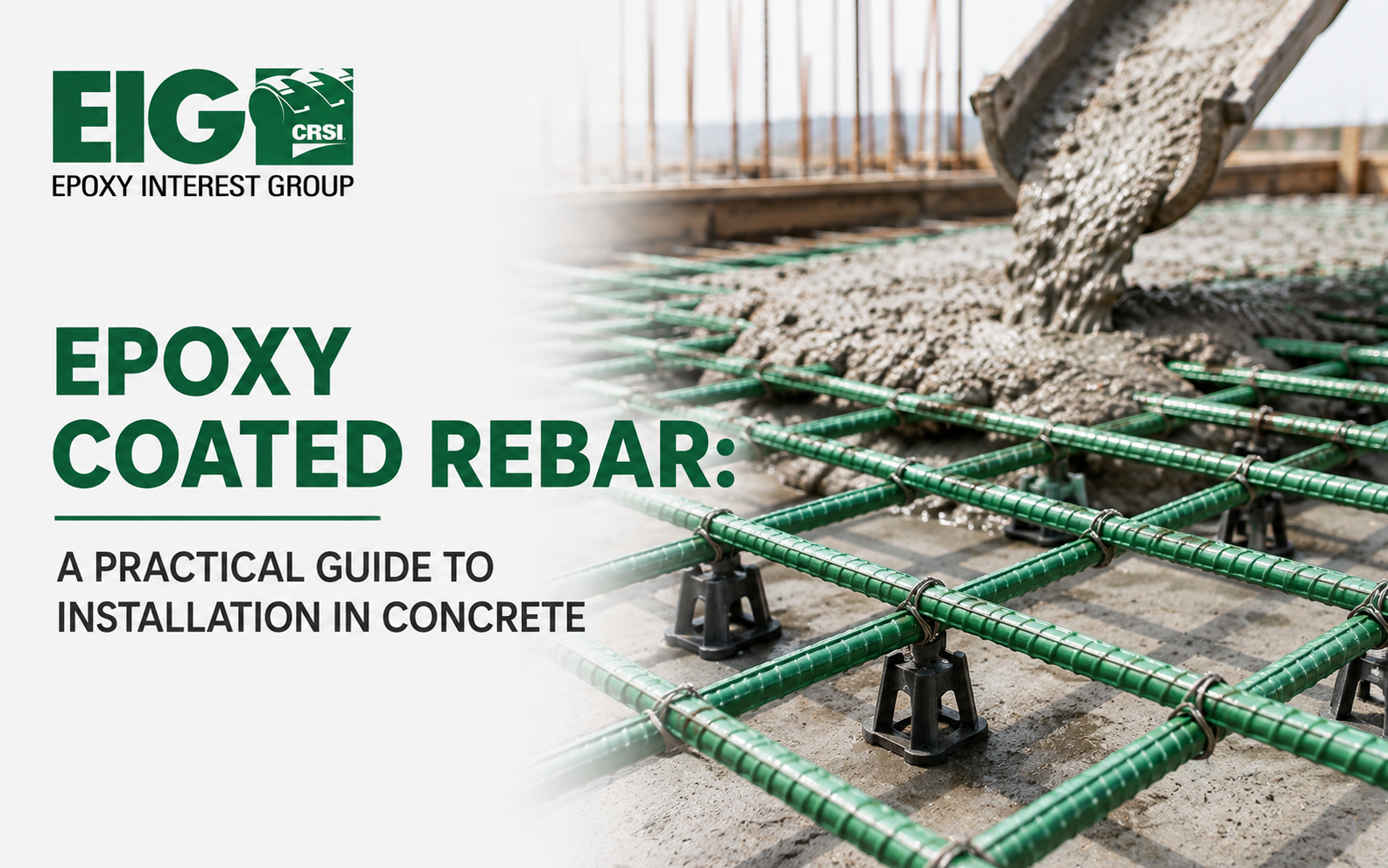
Epoxy Coated Rebar: A Practical Guide to Installation in Concrete
The concrete has low tensile strength, and this is where reinforcing steel comes in. It reinforces the concrete for tension so that it can bear heavy loads. What happens is that steel substances are susceptible to corrosion if moisture, salts and other harmful fields reach the surface of steel. Rust can also widen the crack in both the steel itself and cause cracking or spalling of adjacent concrete.
Epoxy coated rebar coats the steel with a layer of protection. It is most commonly chosen for applications where corrosion resistance is a major design consideration. But it must be properly handled and installed as well to protect that coating.
Start with Careful Handling
Rough handling can possibly damage the epoxy coating. Further, scratches, chips, and cuts can expose the steel under the covering.
Workers must check the steel reinforcement for any visible damage prior to installation. Do not let rebar contact hard or abrasive surfaces that are needless to avoid chafing during uneven and tumbling contact, put into at least three-point-controlled storage.
Maintaining the coated surface from delivery through placement is a key part of installation.
See also: How Expert Vehicle Care Can Save You Money Over Time
Prepare the Reinforcement
Check project drawings for epoxy coated rebar in concrete prior to installing epoxy coated rebar in concrete. Reinforcement shall be cut, bent, supported, and placed in accordance with the drawings.
Bends and connection points might need special care. The coating can be affected by cutting or bending, therefore, damaged areas must be repaired following approved repair procedures.
The aim is clear-cut, keep it wherever it can be kept in the shade of this protective coating.
Place the Rebar Correctly
After the epoxy coating has been applied, and fully cured, rebar preparation gets started. The treated metal is placed into its designated concrete form. Proper spacing and concrete cover are critical since they permit the reinforcement to operate as originally intended.
Choose suitable supports and handling methods that help reducing the risk of coating damages. Do not ever pull a coated bar on rough surfaces.
Prior to pouring concrete, again inspect the reinforcement. Any damage to the visible coating should be repaired in accordance with project specifications.
Why Installation Quality Matters?
Coating additionally protects against corrosion primer and provides an additional barrier. If this is heavily damaged in construction then exposed steel may come into contact with moisture and chemicals more than once.
It means that from the time it gets produced, to how it is stored, all the way through placement in a concrete application, one has to take care of installing epoxy coated rebar in concrete.
Design for Long-Term Performance
Properly used, epoxy coated rebar allows for good corrosion protection. It’s not the type of material that you use on its own.
Better performance can be achieved by careful handling, proper placement, providing enough concrete cover, and repair of coatings. Placing epoxy coated rebar as specified by the project entails a concrete protecting the reinforcement along with assisting in retaining the lifetime of the structure.