Why More Businesses Are Investing in Autonomous Mobile Robots
Five years ago, robots on a warehouse floor were something you saw at a handful of large e-commerce operations with deep budgets for automation. That’s no longer the case. Mid-sized distribution centers, regional 3PLs, and manufacturers who never thought automation was within reach are now bringing in Warehouse Robotics Solutions as a standard part of operational planning, not a luxury reserved for the biggest players in the industry.
The Cost of Doing Nothing Went Up
For a long time, the decision to automate came down to comparing the cost of robots against the cost of staying manual. That comparison has shifted, and not because robots got dramatically cheaper, though pricing has come down. It shifted because the cost of staying manual went up.
Labor availability has become genuinely unpredictable in a lot of regions. Facilities that could once count on filling picker and transport roles reliably now deal with high turnover, inconsistent staffing levels, and rising wages that make manual operations more expensive than they used to be. When the manual side of that comparison gets more expensive and less reliable, automation starts looking less like an upgrade and more like a way to stabilize operations.
This is a different motivation than the one that drove early automation adoption, which was mostly about squeezing out marginal efficiency gains. Now, businesses are automating partly because they can’t reliably staff certain roles at all, and robots fill a gap that human hiring simply isn’t closing fast enough.
The Technology Finally Fits Smaller Operations
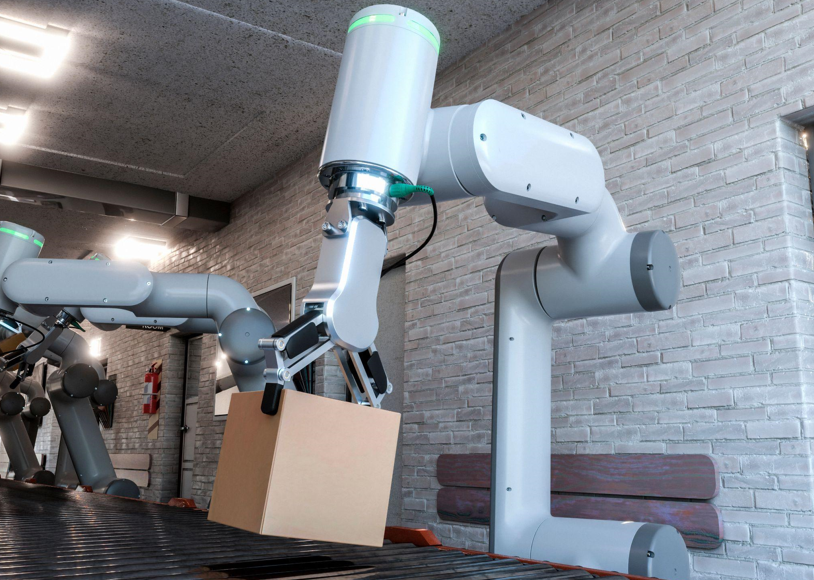
Autonomous mobile robots used to require facility-wide redesigns, fixed infrastructure, and enormous upfront investment that only made sense at massive scale. That’s genuinely changed. Modern AMRs navigate using onboard sensors and mapping software instead of tracks or wires, which means they can be deployed into an existing facility without tearing out the layout first.
This flexibility matters enormously for mid-sized operations. A facility can start with a small fleet covering one section of the warehouse, see real results, and expand from there. There’s no need to commit to a full-scale automation project before knowing whether it actually fits the operation’s specific workflow. This lower barrier to entry is a big part of why adoption has spread well beyond the largest logistics companies.
Redeployability plays into this too. If a business relocates or restructures its facility layout, the robots move with it rather than becoming stranded infrastructure tied to one specific building. That kind of flexibility didn’t exist with earlier automation systems, and it changes the risk calculation for businesses who weren’t sure automation made sense for their situation long term.
Investors and Leadership Are Asking Different Questions Now
Boards and leadership teams evaluating capital investment used to treat automation as a nice-to-have efficiency project. That’s shifted toward treating it as a resilience question. Can this business scale during peak demand without a hiring crisis. Can it maintain service levels if labor markets tighten further. Automation answers both of these in a way that hiring plans alone increasingly can’t guarantee.
This shows up clearly in how warehouse automation investment decisions get framed internally now. It’s less about a return-on-investment calculation based purely on labor savings, and more about operational risk reduction. A facility with robots handling core transport tasks isn’t as exposed to a bad hiring quarter or a sudden spike in turnover the way a fully manual operation is.
That framing changes who’s driving the decision too. It used to be operations managers pushing for automation as an efficiency improvement. Now it’s often coming from leadership levels concerned about long-term staffing reliability, which tends to move these projects through approval processes faster than they used to.
Not Every Facility Sees the Same Return
It’s worth being honest that AMRs aren’t a universal fix, and businesses considering this investment should go in with realistic expectations rather than assuming automatic success because a competitor had a good outcome. Facilities with highly irregular inventory, extremely tight or cluttered floor space, or very low order volume don’t always see returns that justify the investment.
The businesses getting real value tend to have consistent, high-volume transport needs where the same type of movement happens repeatedly throughout the day. Facilities with more chaotic or unpredictable workflows sometimes find that the flexibility they need doesn’t match well with how structured AMR deployment tends to be, at least without a fair amount of custom configuration.
This is why a proper assessment before committing to a fleet matters so much. A business that jumps into automation because it seems like the obvious next step, without evaluating whether their specific operation actually fits the technology, often ends up disappointed with results that a more tailored deployment would have avoided entirely.
What a Smart Investment Actually Looks Like
The businesses seeing strong returns from AMR investment share a few things in common. They started with a clearly defined problem, usually a specific bottleneck in transport or fulfillment, rather than automating broadly without a target. They piloted in a limited area before committing to a facility-wide rollout, which let them catch integration issues early without risking the entire operation.
They also treated the investment as ongoing rather than one-time. Fleet sizing, route optimization, and software integration all need periodic attention as order patterns and business needs shift. Businesses that install a fleet and never revisit the configuration tend to see performance plateau, while those that keep adjusting continue improving results well beyond the initial deployment.
Budget planning for these projects also needs to include more than just the robots themselves. Integration with existing warehouse management software, staff training, and ongoing maintenance all factor into the real cost of automation, and businesses that account for these upfront avoid unpleasant surprises partway through the rollout.
Vendor selection plays a bigger role in long-term satisfaction than people initially expect too. A vendor who only sells hardware and disappears after installation leaves a business managing integration, troubleshooting, and scaling decisions largely on their own. Working with a partner who understands the facility side as well as the robotics side tends to produce a smoother deployment and fewer unresolved issues once the fleet is actually running day to day.
If you’re weighing whether this kind of investment makes sense for your operation and want an honest assessment rather than a sales pitch, it helps to walk through your specific facility and workflow before committing to anything. Contact Us to talk through what a realistic deployment would actually look like, since the right fit depends heavily on your particular operation, not a generic automation package.
See also: Wichita Shipping and the Leadership of Michael Ricklefs in the Freight Industry
A Shift That’s Likely to Continue
The reasons businesses are investing in autonomous mobile robots have changed from a few years ago, moving from pure efficiency gains toward broader concerns about labor reliability and operational resilience. That shift suggests this isn’t a temporary trend driven by hype, but a genuine change in how businesses are planning for the future of their operations.
MTLI has worked with businesses across a range of industries evaluating and implementing warehouse automation, and the pattern is consistent: the strongest outcomes come from a clear-eyed assessment of actual operational needs, not from chasing a trend. If you’re considering this kind of investment for your facility, contact us today and we can talk through whether it genuinely fits your operation.